



PROCEEDINGS

GROWER-INDUSTRYCONNECT

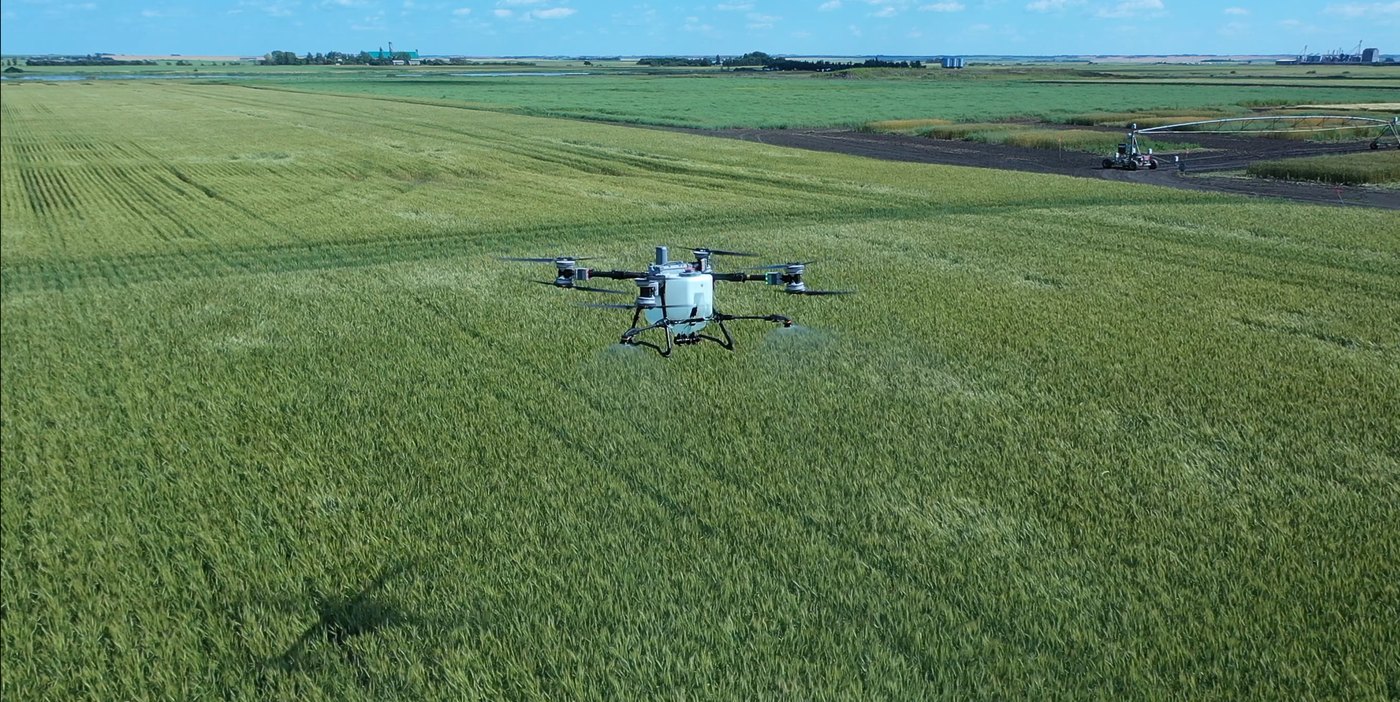
Spray drone over a green crop field

Welcome

Welcome to Saskatoon and to the first Grower-Industry Connect. Herbicide resistance is spreading across the Prairies — and so is the technology built to address it. Today, we aim to bring growers, agronomists, retail, industry and researchers into one room for a focused look at where resistance and weed control stand, and where precision agriculture is headed next.

The morning — Resistance Realities — opens with the latest survey data on resistant weeds in Western Canada, then looks at resistance from the agronomist, grower and retail perspectives: integrated strategies that are working in the field, protecting the herbicides we still have, and what it takes to carry resistance science to farms through a retail network.

The afternoon — Precision Tools — looks at spray drones, satellite-based weed prediction and camera-guided targeted spraying: what they can do today, where they fall short, and how they fit into a sound weed management plan.

Every session leaves time for questions. Please ask them, and keep the conversation going over lunch and at the breaks.

Local Arrangements CommitteeCWSS/SCM 2026 Annual Meeting

WI-FI

Network
Delta_Conference
Password
Saskatoon2026

ROOM

Sessions & lunch
Michelangelo B–C
QR code for CCA CEU sign-in, course PP 64879

CCA CEUs · 4 APPROVED

  • 2Integrated Pest Management
  • 2Crop Management

Scan with the CCA app to sign in and receive your CEUs. Viewing this on your phone? Scan the code in your printed booklet instead.

COURSE CODE PP 64879

Sponsors

Grower-Industry Connect is made possible by our sponsors. Their support keeps the day focused on growers and agronomists — please thank them when you see them today.

Lunch sponsor
Nutrien – Feeding the Future
Coffee break sponsor
Co-op logo, Federated Co-operatives Limited

Speakers

Dr. Charles Geddes
Resistance Realities · 10:10 AM

Dr. Charles Geddes

Agriculture and Agri-Food Canada

Herbicide Resistance in Western Canada: Current Status, Trends, and Emerging Challenges

Herbicide-resistant weeds remain one of the most significant challenges facing crop production across Western Canada. This session will provide an update on the current status and distribution of herbicide resistance in the Prairies, drawing on results from recent weed surveys conducted through the Prairie Weed Monitoring Network. Attendees will learn about new herbicide-resistant weed populations being identified across the region, emerging resistance trends, and what these developments mean for on-farm weed management. The presentation will also highlight advances in genetic testing that are improving the speed and accuracy of resistance detection and diagnosis. In addition, the growing challenge of non-target site resistance will be discussed, including its potential to reduce the effectiveness of multiple herbicide groups. Together, these insights will help farmers, agronomists, and industry professionals better understand evolving resistance risks and support proactive, informed management decisions.

About the speaker

Dr. Charles Geddes has been a research scientist with Agriculture and Agri-Food Canada for the past decade. He recently relocated from Lethbridge, AB to Brandon, MB, where he is establishing a new research program in resistant weed management. Charles grew up on a mixed farm near Pilot Mound, Manitoba. He graduated with a B.Sc. in Agroecology and a Ph.D. in Plant Science from the University of Manitoba. Charles has published 68 peer-reviewed research articles on topics including herbicide resistance, weed ecology, integrated weed management, agronomy, and soil science. He is a co-lead of the Prairie Weed Monitoring Network and 1st Vice President of the Canadian Weed Science Society.
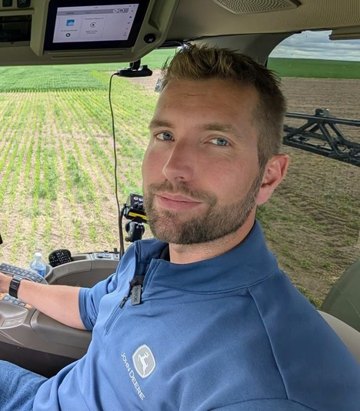
Quinton Cubbon
Resistance Realities · 10:45 AM

Quinton Cubbon

Saskatchewan Ministry of Agriculture

An Integrated Management Approach for Herbicide-Resistant Wild Oats and Kochia

This presentation will share practical, on-farm strategies that have successfully reduced wild oat and kochia densities at the field level. Three key approaches will be discussed: converting problem areas of a field to perennial forages to break the weed life cycle and deplete the seedbank; using harvest weed seed destructors to reduce weed seed return at harvest; and layering herbicides with multiple effective modes of action to improve control and slow the development of resistance. Real-world examples will show how these tools can be combined into an integrated management plan that fits within a working farm operation.

About the speaker

Quinton Cubbon, BSc, AAg, is a Crops Extension Specialist with the Extension Services Branch of the Saskatchewan Ministry of Agriculture. He has a strong agriculture background built on his experiences working on the farm in the North Battleford area for the last 10 years. He strives to support producers in succeeding by giving strong agronomic advice on 4R fertility, pest identification and overall agronomic issues. His experience ranges from farming, retail agronomy, small plot research and field scale research. He received his Bachelor of Science in Agriculture, majoring in agronomy, from the University of Saskatchewan.

Rob Stone
Resistance Realities · 11:30 AM

Rob Stone

Stone Farms Inc. · Vice-Chair, SaskWheat

More Actives Would Be Really Nice, But…: A Farmer’s View of Herbicide Resistance

Some nights, herbicide resistance is what keeps me awake. On our farm near Davidson, it’s no longer a someday problem. It’s part of every rotation decision, every spray plan, and every conversation about what comes next. New modes of action aren’t arriving fast enough to rescue us, so protecting the ones we have matters more than ever. That gets harder when new products are combinations of already overused groups and cheaper generics encourage a broader use of actives that develop resistance quite quickly.

In this talk, I’ll share what we’re doing about it. That includes cultural practices we’ve adopted or are testing, like shallow tillage, mowing, grass and perennial forage in the poor and non-productive areas, and stronger crop competition. I’ll walk through how we plan around resistance, what’s worked, what hasn’t, and the trade-offs that come with each choice. I’ll also offer a few thoughts on how industry can best support growers in stewarding these tools. Then let’s talk about it, because I suspect I’m not the only one losing sleep.

About the speaker

Rob Stone operates Stone Farms Inc. near Davidson, Saskatchewan, a family farm founded in 1904. He farms with his wife, his parents, and his rapidly growing boys, producing spring wheat, chickpeas, lentils, and canola. Rob graduated from the University of Saskatchewan in 1999 with a degree in agronomy and has been actively farming since 2001. Rob is Vice-Chair of the Saskatchewan Wheat Development Commission (SaskWheat), where he also chairs the Research Committee. He also serves on the boards of Cereals Canada and the Canadian Wheat Research Coalition. In his spare time, Rob enjoys sweeping the shop, travelling, and hanging out with his family at the camper or around the backyard fire pit.

Twyla Jones
Resistance Realities · 11:55 AM

Twyla Jones

P.Ag., CCA · Nutrien Ag Solutions

Resistance Management: Extending the Science from a Retail Perspective

Twyla will review the current challenges in extending the scientific evidence on resistance management to a grower level through a retail network. She will provide real-life experiences from her agronomy team and will challenge the audience to think about extension and ensure that growers understand the full impacts of their decisions.

About the speaker

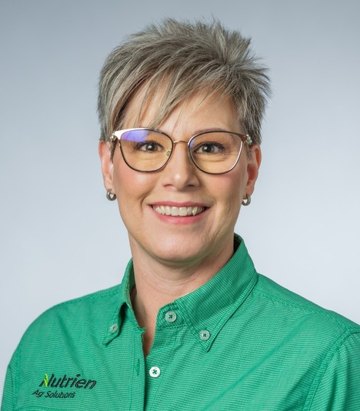
Twyla Jones, P.Ag., CCA, is the Senior Manager, Agronomic Innovation for Canada at Nutrien Ag Solutions, where she leads a team of technical agronomists that support agronomic innovation, product positioning, and technical capability across the Canadian retail organization. In this role, Twyla supports the integration of evidence-based agronomy and farm trial results for biologicals, crop nutrition, crop protection and digital tools into practical, field-ready solutions for growers. Twyla holds a degree in Crop Science from the University of Alberta and has over 25 years of experience with Nutrien and its legacy organizations, including Alberta Pool. Her career spans retail sales, branch leadership, and agronomy, providing her with a deep appreciation for both the science of crop production and the realities of farm-level decision making.

An active contributor to the profession, Twyla is a Professional Agrologist and Certified Crop Advisor. She is a past Chair of the Alberta Institute of Agrologists, where she currently acts as a subject matter expert in the Crop Production practice area. Twyla lives on the family farm southwest of Lloydminster, Alberta, where she, her husband and their two girls operate a grain farm.

Dr. Tom Wolf
Precision Tools · 1:15 PM

Dr. Tom Wolf

Agrimetrix Research & Training

Is Spraying Pesticides by Drone a Good Idea?

Dr. Tom Wolf¹ and Dr. Jason Deveau² · ¹Agrimetrix Research & Training · ²Ontario Ministry of Agriculture, Food, and Agribusiness

Drones represent a new and dynamic method of spray application. Recent changes by the Pesticides Regulatory Directorate (PRD) have allowed all pesticides with an aerial label to be applied by spray drone. Registrants wishing to opt out of this application method need to file a request with PRD for a label amendment. Drone applicators must follow all label instructions for crewed aircraft, must operate within Visual Line of Sight, and must separate duties between piloting a spray drone and being a mixer/loader. Initial research showed that spray drones generate very variable spray deposits and that the deposited amount and the swath width depend on a large number of operational (speed, height, droplet size, water volume, payload), crop (type, height, density), and weather (wind speed, wind direction) variables. Drone productivity is very dependent on a tendering setup, particularly loading speed and ferrying distances. This application method will continue to change rapidly as new drone models are introduced and results from the field are reported.

About the speaker

Tom Wolf is a spray application researcher with Agrimetrix Research & Training in Saskatoon. He founded Sprayers101.com with Jason Deveau in 2015, and the project has grown to become the world’s most visited website on spraying-related issues. Tom’s research interests include improving sprayer efficiency, minimizing spray drift, and maximizing efficacy. Tom grew up on a grain farm in the Red River Valley of Manitoba and obtained his BSA and M.Sc. at the University of Manitoba and his Ph.D. at the Ohio State University. He has been named Outstanding Agrologist by the Saskatchewan Institute of Agrologists and is a past President and Fellow of the Canadian Weed Science Society.
Dr. Kris Guenette
Precision Tools · 1:50 PM

Dr. Kris Guenette

Corteva Agriscience Canada

Closing the Knowledge Gap on Drone Herbicide Applications: A Corteva Perspective

Dr. Kris Guenette, Dr. Kevin Falk and Dr. Matt Ball · Corteva Agriscience Canada

Grower interest and hunger for knowledge in spray drone herbicide applications is outpacing the speed of research development, while adoption is happening ahead of the regulatory framework needed to support stewardship and responsible use. Since 2022, Corteva has been running field trials across Canada comparing ground and remotely piloted aircraft systems (RPAS) herbicide applications in two use cases: pasture and land management, where drones can reach steep, wet, or otherwise inaccessible terrain, and broadacre cropping, where field-scale efficiency is the priority. Our trials confirm what the broader industry is finding: drone performance is highly sensitive to parameters such as flight height, speed, carrier volume, pest targets and weather. Single-pass deposition patterns vary widely, and meaningful ground-versus-RPAS comparisons demand standardized methodology as well as drone-specific best management practices. This presentation shares results from Corteva’s pasture and broadacre programs, highlights the parameters that matter most, and examines where current platforms fall short as well as how quickly the technology is evolving to close those gaps.

About the speaker

Kris Guenette works for Corteva Agriscience as a Field Scientist in Alberta, leading projects in discovery, cereal, pasture and land management herbicides across Western Canada. His research interests are directed towards improving the sustainability of cropping systems, specifically in the areas of applied biotechnology and agronomic practices within Canadian agriculture. Kris grew up on a family grain farm in Alberta and attended the University of Alberta, where he earned a B.Sc. in Civil Engineering, an M.Sc. in Soil Science and a Ph.D. in Soil Biogeochemistry.

Dr. Greg Stewart
Precision Tools · 2:45 PM

Dr. Greg Stewart

Geco Strategic Weed Management

Targeting the Weed Seedbank: From Prediction to Integrated Weed Management Prescriptions

Weed populations exhibit spatial patterns and dynamic trajectories over time. Where weeds have appeared in previous seasons, and how those patterns are changing, provides information about where weed pressure is most likely to occur in the future. Geco uses five years of historical satellite imagery and field history to track those patterns and predict areas that are at high risk of weed pressure in the coming season.

These predictions can be used to coordinate multiple weed management actions, concentrating greater control pressure where it is most needed. This includes targeted residual herbicides, variable-rate seeding, in-crop herbicide applications and harvest weed seed control.

This talk will discuss the underlying concept, practical deployment on commercial farms, and research underway to assess the agronomic and economic impacts of coordinating multiple targeted weed management actions across the season.

About the speaker

Dr. Greg Stewart is the founder and CEO of Geco Strategic Weed Management, a Canadian ag-tech company using satellite imagery and AI to help farmers understand where weeds have occurred and predict where they are likely to appear in the coming season. Geco works with more than 180 farms across Canada and internationally, turning weed maps into practical tools for targeted herbicide applications, variable-rate seeding and other integrated weed management decisions.

Greg has a PhD in engineering from UBC and more than 20 years of experience developing data, automation and control technologies across agriculture and other industries. His focus at Geco is on making advanced technology practical for farmers, agronomists and the equipment they already use.

Christian Hansen
Precision Tools · 3:15 PM

Christian Hansen

John Deere Canada

See & Spray: Advancing Precision Weed Management

This presentation will provide an overview of John Deere See & Spray technology and its role in precision weed management. It will discuss the evolution of the platform, lessons learned through implementation, and how targeted application technology can fit within broader approaches to managing weeds and herbicide resistance. The presentation will also explore what this technology means for producers today and how continued advances in sensing, machine learning, and application systems may influence weed management in the future. The focus will be on practical considerations for integrating precision application technology into farming operations while maintaining sound agronomic decision-making.

About the speaker

Christian Hansen is an Agronomist with John Deere Canada Product Engineering. His work focuses on agronomy and precision agriculture, with experience supporting the development and evaluation of technologies for crop production and application systems. His work includes precision weed management and John Deere See & Spray technology, connecting field agronomy with equipment and data-driven tools. Christian works with growers, agronomists, researchers, and industry partners to understand how new technologies perform under field conditions and how they can be integrated into their operations.

Connect

STAY CONNECTED WITH THE

Canadian Weed Science Society